Key takeaways
– A cardiac CT angiogram is a non-invasive scan that shows the inside of your coronary arteries in about 10 minutes.
– Major cardiology guidelines now rank it as a first-line test for stable chest pain, ahead of the traditional treadmill stress test.
– A normal result is very reassuring, because the scan rules out significant coronary artery disease with roughly 98% accuracy.
– You will need to avoid caffeine for 12 hours and food for 4 hours beforehand.
– Al Safwa Radiology Center performs cardiac CT angiograms on a 64-slice CT scanner in Al Qasimia, Sharjah.
—
If your doctor has recommended a cardiac CT angiogram in Sharjah, you probably have two questions. What does the scan actually show? And why this test rather than a stress test?
This guide answers both. It also walks through preparation, safety, and what happens on the day.
What is a cardiac CT angiogram?
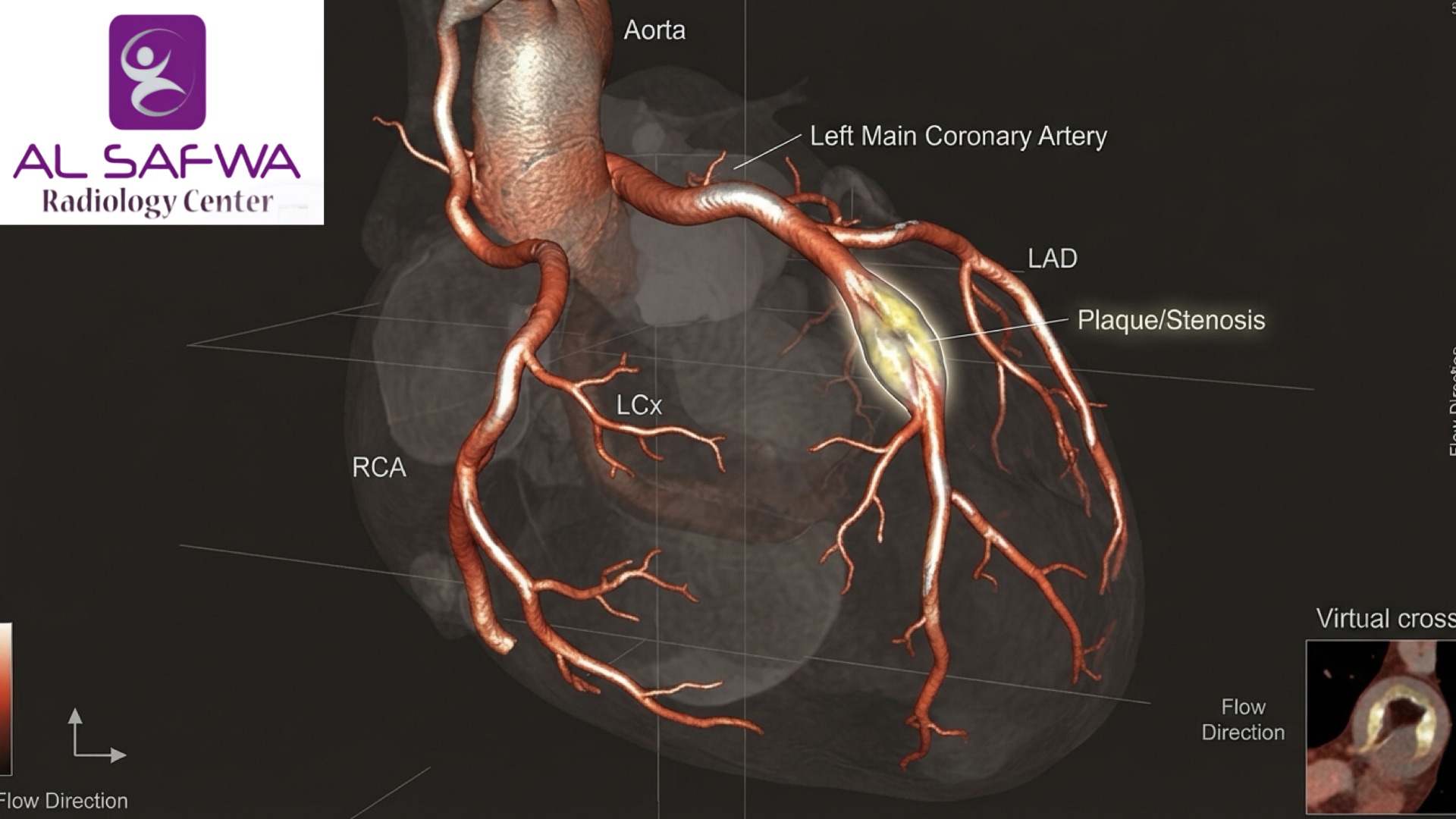
A cardiac CT angiogram, often shortened to CCTA, is a scan that produces detailed pictures of the coronary arteries — the vessels supplying blood to your heart muscle. A radiographer injects an iodine-based contrast dye into a vein in your arm. That dye highlights the arteries. The CT scanner then captures images as your heart beats.
The result is an anatomical map. Your cardiologist can see the arteries themselves, including any narrowing and any plaque building up in the walls.
Crucially, nothing enters your arteries. No catheter, no incision, no overnight stay. You walk in, and you walk out.
Why cardiologists now order this test first
For decades, the standard first step for chest pain was a functional test, usually a treadmill stress test. That approach has shifted.
The 2021 chest pain guideline from the American Heart Association and American College of Cardiology gave CCTA a Class 1, Level of Evidence A recommendation. That is the strongest rating the guideline awards. It applies to patients with stable chest pain, intermediate-to-high risk, and no previously diagnosed coronary artery disease. Britain’s NICE guidance reached a similar conclusion, recommending cardiac CT as the first investigation for suspected coronary artery disease.
Why the change? A stress test tells your doctor whether your heart struggles under exertion. It infers a blockage from how your heart behaves. A CCTA shows the artery directly.
That difference matters in two ways. First, the scan detects plaque that has not yet narrowed the artery enough to cause symptoms — early disease a stress test would miss entirely. Second, a clear scan is genuinely conclusive. With a negative predictive value near 98%, a normal CCTA effectively rules out significant coronary artery disease.
Who might need a cardiac CT angiogram?
Your doctor may refer you if you have:
– Chest pain or tightness that appears with exertion and settles with rest
– Unexplained breathlessness during ordinary activity
– An unclear or borderline stress test result that needs clarification
– Several cardiac risk factors — diabetes, high blood pressure, high cholesterol, smoking, or a family history of early heart disease
– A raised calcium score found on a previous scan
The test is not for everyone. Emergency chest pain requires immediate hospital care, not a scheduled scan. If you are experiencing severe chest pain right now, call 998 or go to your nearest emergency department.
Some patients also need a different test. Significant kidney impairment, a known allergy to iodinated contrast, or pregnancy will usually rule out a CCTA. Your doctor and our radiologist will review your history and confirm the scan suits you.
How to prepare for your scan
Preparation is simple, but it genuinely affects image quality. Please follow these steps.
Avoid caffeine for 12 hours. That means no coffee, tea, energy drinks, or chocolate. Caffeine raises your heart rate, and a faster heart blurs the images.
Stop eating 4 hours before your appointment. You may drink plain water.
Take your medication as instructed. Your doctor may prescribe a beta blocker to slow your heart rate before the scan. Radiologists aim for a heart rate around 60 beats per minute, because a slower, steadier heart produces sharper pictures. Bring a list of everything you currently take.
Tell us about your kidneys and allergies. The contrast dye passes through your kidneys. We may ask for a recent creatinine blood test. Mention any previous reaction to contrast dye or iodine.
Leave jewellery at home and wear comfortable clothing without metal fastenings.
What happens on the day
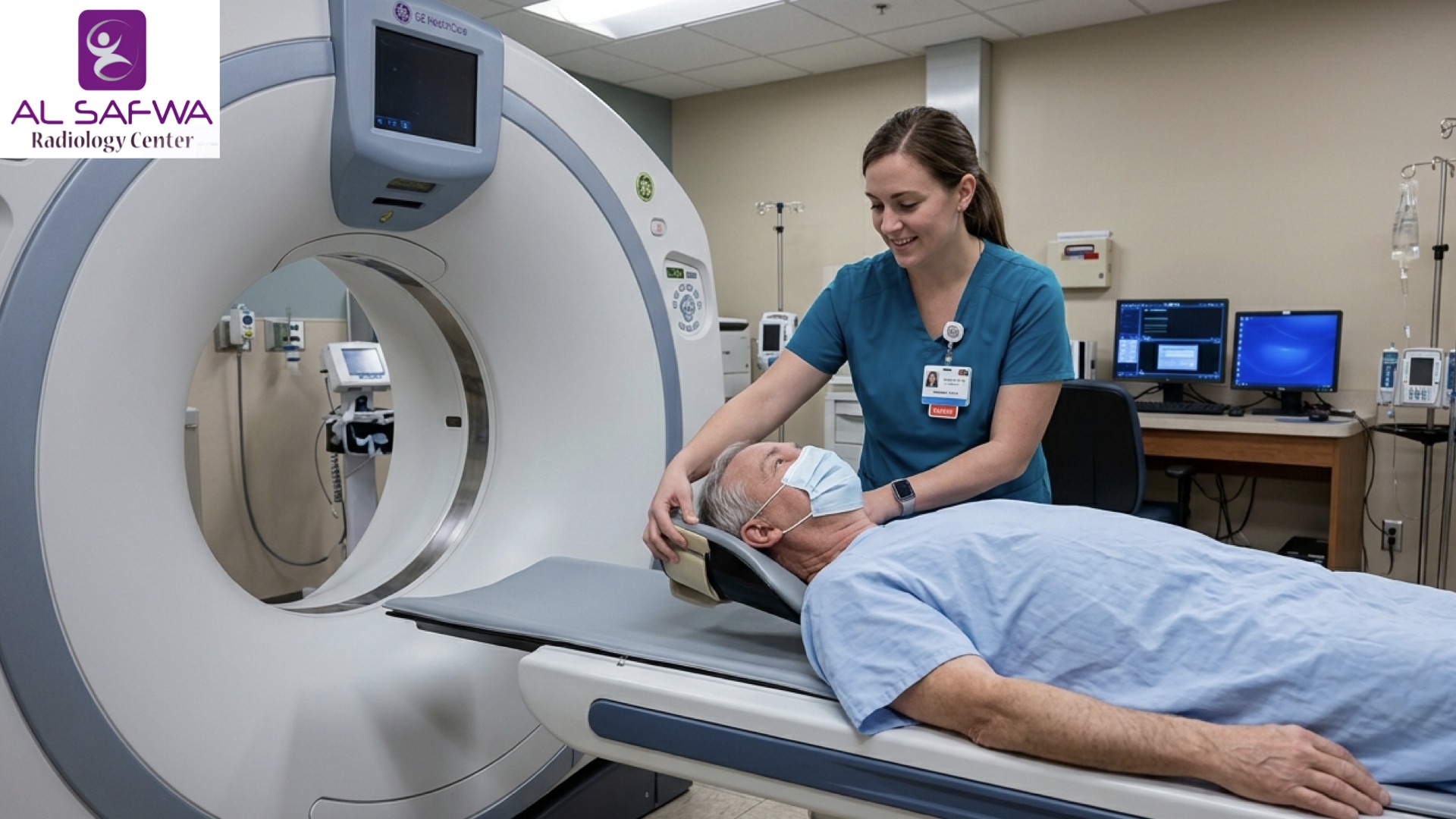
The appointment takes about 30 to 45 minutes in total. The scan itself lasts only a few minutes.
Our technologist places small ECG electrodes on your chest to track your heartbeat. A cannula goes into a vein in your arm. You then lie on the scanner table, and the machine passes around your chest.
Our technologist will ask you to hold your breath for roughly 5 to 10 seconds while the scanner captures images. Many patients feel a warm flush spreading through the body as the contrast enters. That sensation is normal and passes within seconds. Some people also notice a metallic taste.
Afterwards, you can eat, drive, and return to work straight away. Drinking extra water for the rest of the day helps flush the contrast from your system.
A radiologist then reviews your images and prepares a report for your referring doctor.
Is it safe?
Two concerns come up most often: radiation and contrast dye.
Radiation. A CCTA does use ionising radiation. Modern scanners and dose-reduction protocols have cut that exposure substantially compared with older equipment. Slowing your heart rate helps here too, since it allows a shorter scan. Your doctor weighs this small risk against the value of a clear diagnosis.
Contrast dye. Serious reactions are uncommon. Mild effects such as a warm sensation or a brief metallic taste are far more typical. Our team screens every patient for kidney function and allergy history beforehand, and staff remain with you throughout.
Comparison Table: Cardiac CT Angiogram vs. Stress Test vs. Invasive Angiogram
| Feature | Cardiac CT Angiogram | Stress Test | Invasive Angiogram |
| What it shows | The artery anatomy directly | How the heart responds to exertion | The artery anatomy directly |
| Invasive? | No | No | Yes — catheter through an artery |
| Time | Around 10 minutes | 30–60 minutes | 30–60 minutes, plus recovery |
| Can treat during test? | No | No | Yes — stents can be placed |
| Best used for | Ruling out disease, finding early plaque | Assessing functional capacity | Confirmed severe disease needing treatment |
These tests complement each other. A CCTA often prevents an unnecessary invasive procedure. When it finds severe disease, it helps your cardiologist plan the next step precisely.
Cardiac CT angiogram at Al Safwa Radiology Center, Sharjah
Al Safwa Radiology Center performs cardiac CT angiograms on a 64-slice CT scanner at our Al Qasimia facility. Our radiologists and technologists handle the full process, from screening and preparation through to the final report for your doctor.
We are located on the 3rd Floor, Tower C, Al Marzouqi Towers (CG Mall), King Faisal Street, Al Nud, Al Qasimia, Sharjah. Free parking is available on site.
We accept a wide range of insurance providers, including Daman, AXA, NAS, Nextcare, Mednet, Neuron, Oman Insurance, ADNIC, and others. You can [check the full insurance list here](https://alsafwame.com/insurance-radiology-sharjah/), or call us to confirm your specific plan and coverage.
To book, call +971 6 556 3969 , WhatsApp +971 54 704 9110 , or request an appointment online.
If your doctor has recommended a cardiac CT angiogram in Sharjah, you probably have two questions. What does the scan actually show? And why this test rather than a stress test?
This guide answers both. It also walks through preparation, safety, and what happens on the day.
Yes, and any doctor can refer you. You do not need to see a cardiologist first. Your family doctor, physician, or any treating clinician can assess your symptoms and send you for the scan.
Plan for 30 to 45 minutes at the centre. The scan itself takes only a few minutes.
No. The only discomfort is the small needle prick when the cannula goes in.
Yes. A CCTA requires no sedation, so you can drive and resume normal activity immediately.
Your report goes to your referring doctor, who will discuss the findings and next steps with you. Depending on severity, that might mean medication, lifestyle changes, or a referral for further cardiac assessment.
That depends on your specific policy, not just your insurer. We apply to your insurance company for approval and confirm the outcome before your appointment.
No, though the two are related. A calcium score measures calcified plaque without contrast dye. A CCTA uses contrast and shows both calcified and soft plaque, plus the degree of narrowing.
This article is general health information and does not replace medical advice. Al Safwa Radiology Center is a diagnostic imaging facility and does not provide emergency or treatment services. Please discuss your symptoms and the right test for you with a qualified doctor. If you have severe or sudden chest pain, go to a hospital emergency department immediately.